
How to Set Up a Colour-Coded Chopping Board System in Your Kitchen
Good food begins with good hygiene. Whether you’re a professional chef or a weekend cook, how you handle food can affect your health more than you might think. Not all foodborne illnesses are caused by spoiled ingredients; some are the result of kitchen mistakes.
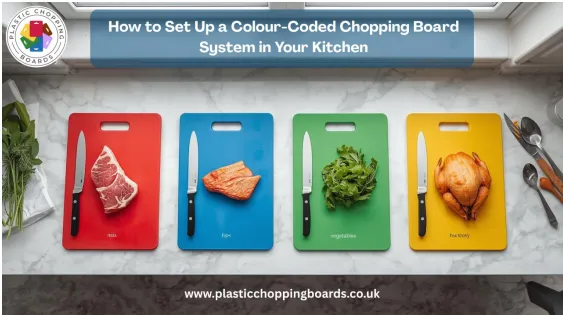
This is where a colour coded chopping board system comes in really handy. It’s a simple, visual way to keep raw and cooked foods separate, eliminate confusion, and promote safer food handling practices. Associating certain colours with different food groups can help prevent bacterial contamination in your kitchen.
Also Read: PEBC Exam 2025 Guide: Steps, Syllabus & Prep Tips for Success
The use of different-coloured chopping boards is not only hygienic; it also keeps the kitchen organised and aligned with recognised kitchen safety standards. When used with heavy-duty, easy-to-clean plastic cutting boards, this system offers style and function for both your home and professional kitchen.
What is a Colour Coded Chopping Board System?
A colour-coded chopping board system is exactly what it sounds like: a different chopping board colour for a distinct food group. Rather than having just one board for everything, you have three or more boards: one for meat, one for vegetables and fruit, one for fish, and one for cooked food. The method is standard in commercial kitchens, but it works just as well at home. Plastic cutting boards are the most suitable for this system, as they are easy to clean, lightweight, and durable.
The system relies on universally recognised food safety chopping board colours, making it intuitive even for people unfamiliar with formal kitchen practices. Once you get the hang of it, it becomes second nature.
Why You Should Incorporate Colour Coding into Your Kitchen
The primary motivation for a colour-coded cutlery system is hygiene. Bacteria can now transfer invisibly when the juices of raw meat come into contact with a vegetable or cooked meal.
Using dedicated kitchen hygiene chopping boards can break the chain. Studies consistently show that bacteria such as Salmonella and E. coli can survive on surfaces for hours without treatment. One careless use of a cutting board can undermine all other hygiene precautions.
For the home cook, it provides clarity and confidence. It also allows frequent cooks or those preparing larger quantities to cook consistently and quickly. In both scenarios, it reinforces daily processes and supports trusted kitchen safety standards without complicating them.
What Colour Chopping Board is for Food Safety?
Here’s a colour scheme that is widely applicable and appropriate for most kitchens:
| Board Colour | Food Type |
| Red | Raw meat |
| Blue | Raw fish |
| Green | Vegetables and fruits |
| Yellow | Cooked meats |
| Brown | Root vegetables |
| White | Dairy and bakery |
These colours are not random. Red indicates raw meat and a higher risk of contamination, while green indicates fruit and vegetables. White is used for foods that don’t require extensive preparation, such as bread or cheese.
Applying this system to all your kitchen chopping boards at all times will provide consistency, make it easier to remember, and reduce errors, particularly if more than one person is using the kitchen.
Selecting the Best Material: Plastic Cutting Boards vs. Other Solutions
Chopping boards are made from different materials, such as wood, bamboo, glass, and plastic. While all certainly have a place, plastic cutting boards are the best choice for colour coded systems.
Plastic cutting boards are simple to clean, moisture-proof and lightweight, and , in many cases, they hold up well in the dishwasher. Unlike wood, they do not retain liquids, and unlike glass, they are not harmful to knives.
From a cleanliness standpoint, plastic boards take priority in commercial settings because they can be sanitised more easily. When properly cared for, they promote safety and longevity better than many other options.
In short:
| Material | Key Benefits | Drawbacks | Best Use Case |
| Plastic | Lightweight, dishwasher safe, moisture-proof, and easy to sanitise. | Can develop deep grooves over time where bacteria hide. | Commercial kitchens & colour-coded systems. |
| Wood | Durable and aesthetically pleasing. | Porous (retains liquids) and requires manual oiling; not dishwasher safe. | General prep and serving. |
| Bamboo | Eco-friendly and harder than most woods. | Can be tough on knife edges; prone to splitting if not dried properly. | Sustainable home kitchens. |
| Glass | Non-porous and very easy to clean. | Harmful to knives (dulls blades quickly); slippery and fragile. | Decorative serving or rolling dough. |
How To Use a Colour-Coded Chopping Board System
There’s no need to overhaul your kitchen to start using the colour-coded chopping board system. A couple of simple steps will do:
1. Evaluate how you cook
Consider the types of food you cook most often and how many boards you’ll need.
2. Get the right colours
Choose coloured chopping boards that match standard food categories.
3. Label well
In addition to colours, simple labels can help reinforce correct usage.
4. Store boards separately
Keep separate boards in place for different foods.
5. Educate everyone using the kitchen
A little guidance goes a long way in establishing uniformity.
This system-based design philosophy also works well in professional kitchen organisation and in the kitchens of everyday households.
Maintaining Hygiene and Safety Standards
Cleaning rules are as important as colour coding.
- Wash boards as soon as you are finished with them, using hot water and a small amount of detergent.
- For routine cleaning, sanitise with food-safe agents.
- Change boards when deep gouges develop, as these can harbour bacteria.
- Even the most hygienic chopping boards in the kitchen have a finite lifespan, and detecting wear early protects food safety.
- Dry the boards thoroughly before storing them to prevent moisture buildup, which can affect hygiene over time.
Common Mistakes to Avoid
Even with a system in place, a few habits can undermine its effectiveness:
- Using the wrong colour out of convenience
- Washing boards by rinsing rather than scrubbing with soap
- Wet boards stacked together
- Disregarding signs of damage or wear and tear
Not making these mistakes will keep your coloured chopping boards working as intended and support long-term cross contamination prevention.
Conclusion
Planning your colour-coded chopping board system is an effective way to improve everyday kitchen hygiene without buying new equipment or overhauling your workspace.
With the right use of coloured chopping boards, you can separate raw and cooked foods into different sections to minimise the risk of cross-contamination without complicating your routine with an additional step.
With repeated use, this routine encourages safer preparation habits, maintains an organised food-prep station, and ensures a clean work area.
Whether you whip up meals on occasion or prepare feasts each day, colour-coding eliminates guesswork and brings a bit more order to your workspace. It’s the little adjustments like this that can be life-changing, transforming your kitchen into a safer, more productive environment for everyone who sets foot in it.
Frequently Asked Questions
1. Do I really need to own more than one chopping board?
Yes. Having separate boards greatly reduces the likelihood of harmful bacteria being transferred from one food type to another.
2. Can plastic cutting boards be used safely every day?
Good-quality plastic cutting boards are food-safe, long-lasting, and easy to clean.
3. When should I change my chopping boards?
Changing them when they develop deep cuts or stains is also a good idea, as these can harbour bacteria.
4. Is this system suitable for a small kitchen?
Absolutely. Two or even three simple colour-coded boards can make a big difference in the way you cook and clean up.